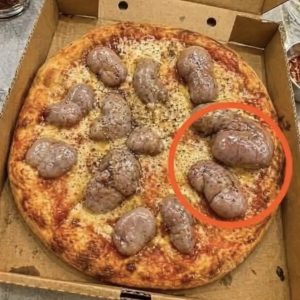
I ordered a pizza one evening, expecting nothing more than a simple meal after a long day. When the delivery arrived, everything appeared perfectly normal. The box was warm, the smell was familiar, and it felt like any other pizza order. But as soon as I opened the lid, something about it caught my attention and made me pause.
For a few moments, I simply stared at the pizza. The cheese looked different from what I was used to seeing, covered with small raised bubbles scattered across the surface. Instead of the smooth, evenly melted appearance I expected, it looked unusual and unfamiliar. The sight was strange enough to make me question whether something was wrong.
My thoughts quickly jumped from one possibility to another. At first, I assumed the cheese had been overcooked. Then I wondered whether the ingredients were spoiled or if a mistake had been made during preparation. Curious and slightly concerned, I searched online for an explanation. It didn’t take long to discover that many others had noticed the same thing. The bubbles were simply pockets of air and moisture trapped beneath the cheese that expanded during baking as the heat increased.
Once I understood the reason, the pizza no longer seemed suspicious. In fact, it looked completely normal. I took a bite and found that it tasted exactly as expected. That small experience became a reminder of how easily unfamiliar things can lead us to the wrong conclusions. Sometimes what appears unusual is not a problem at all—it is simply something we have not encountered before.