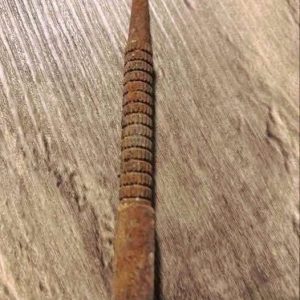
Have you ever walked through an older home and noticed that nearly every wooden baluster looks identical, except for one that seems to be installed upside down? At first glance, it might look like nothing more than a carpenter’s mistake, but there are several possible reasons for this unusual detail. The baluster may have been fitted incorrectly, replaced during a later renovation, or positioned differently because of an issue during construction. Since many features in historic homes were handmade, slight differences were not unusual.
There is also a popular architectural tradition that gives the upside-down baluster a more symbolic meaning. According to folklore, some craftsmen deliberately included an imperfect or reversed element as a reminder that “only God is perfect.” While this makes for a memorable story, there is no universal historical evidence showing that every upside-down baluster was installed for this particular reason. In many older houses, the explanation may be far more ordinary, such as a repair, an installation error, or a simple design choice.
If you find an upside-down baluster in your own home, there is usually no reason to rush to correct it. If it is firmly secured and serves only a decorative purpose, leaving it in place may be the safest option. In a historic property, such a small irregularity could even contribute to the building’s character. Instead of changing it, examine the surrounding clues. Old photographs, renovation records, differences in paint or wear, and variations in nails or fasteners may help reveal whether the piece was replaced at some point.
Ultimately, an upside-down baluster does not have one universal meaning. It might be an honest mistake, the result of an old repair, an intentional design decision, or simply a quirky detail that has survived for generations. That uncertainty is part of the charm of older homes. Sometimes, the smallest imperfections can provide fascinating clues about the people who built, repaired, and lived in them long before us.