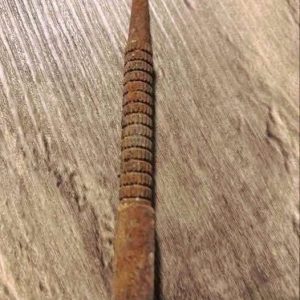
The morning had begun like any other Saturday. Sunlight streamed through the windows, painting warm amber streaks across my living room floor as the city gradually woke up. I made myself a cup of coffee and opened the glass door leading to my balcony, my small sanctuary filled with weathered chairs and potted succulents. But I stopped before stepping outside. Near the corner of the railing, something pale caught my attention. It was small, strangely shaped, almost translucent, and completely unfamiliar. Against the gray tiles, it looked completely out of place. I stared at it, trying to figure out what I was seeing. Its soft, fleshy appearance and unusual structure were unsettling, and the fact that it remained perfectly still made it seem even more mysterious.
I was accustomed to seeing the occasional moth, spider, or pigeon on the balcony, but this was different. I cautiously stepped back without taking my eyes off the strange object. From a distance, I wondered whether it might be organic debris, a piece of fungus, or something that had fallen from another apartment. Eventually, curiosity overcame my hesitation, so I took out my phone and zoomed in with the camera. The enlarged image revealed a segmented, ribbed surface that made it clear this was not a stone or ordinary piece of garbage. It appeared to be biological. That realization immediately sent my imagination in different directions. I wondered whether it could be an invasive species, part of an infestation, or perhaps something connected to an exotic pet. I took several photographs and sent them to my friends, but their reactions—ranging from “Gross” to “Call an exterminator”—did little to calm me.
After staring at the strange little creature for several minutes, I realized that I wasn’t truly afraid of the creature itself. I was afraid because I didn’t know what it was. Without an explanation, my mind had automatically filled the uncertainty with the worst possibilities. Finally, I opened a search engine and described everything I could observe: pale, segmented, small, curled, fleshy, balcony. I searched through photographs of insects, larvae, garden pests, and other creatures until I came across an image that looked remarkably similar. It appeared to be a beetle larva, commonly called a grub. Suddenly, the mystery became much less frightening. It wasn’t an alien organism, a dangerous creature, or definite evidence of a horrifying infestation. It was simply one stage in the life cycle of a beetle. I couldn’t know exactly how it had reached my balcony—it might have been carried by a bird, blown there, or emerged from the soil in one of my planters—but at least I finally had an explanation.
What surprised me most was how quickly the creature seemed to change once I understood what I was looking at. A few minutes earlier, its pale color had seemed eerie, its stillness ominous, and its segmented body almost horrifying. Now, it simply looked like a fascinating little part of nature. Nothing about it had actually changed; only my understanding had. I carefully moved it with a piece of stiff paper and placed it in a small container before relocating it to the soil of a large planter. Later, I returned to the balcony with my now-cold coffee and sat in the same chair, amused by how much time I had spent worrying about something so harmless. The balcony hadn’t changed, and neither had the creature. What changed was the story I had created around it. The experience reminded me that uncertainty can quickly turn into fear when imagination fills in the gaps. Sometimes the best response to something unfamiliar isn’t panic but curiosity: take a closer look, ask questions, seek reliable information, and make sure you actually understand what you’re seeing. Sometimes, the thing keeping you from stepping outside isn’t a monster at all.