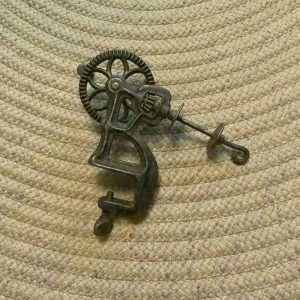
Sometimes, the most interesting discoveries are not valuable antiques, but ordinary household objects that have quietly disappeared from everyday life. This unusual vintage desk accessory is a perfect example. With its warm golden-brown appearance and sturdy construction, it may initially look like a decorative object. Once its purpose is understood, however, the design makes much more sense: it is an old-fashioned tape dispenser, likely dating to the mid-20th century and possibly made from wood, Bakelite, or another durable material.
Unlike the lightweight plastic dispensers commonly used today, older versions were often designed with enough weight to remain firmly in place while tape was pulled and cut. That made them convenient to operate with one hand. Some were also attractive enough to become permanent fixtures on desks, counters, or workspaces. If the dispenser is made from Bakelite, its brown, amber, or reddish tones can add to its vintage appeal, although color alone is not enough to identify the material.
The mechanism itself is remarkably simple. A roll of adhesive tape sits on a spindle or inside the body of the dispenser, allowing the user to pull the tape forward before tearing it against a serrated cutting edge. There are no electronics, batteries, or complicated components involved—just a practical design created to perform one small task efficiently. Similar dispensers could once be found on teachers’ desks, in offices, shops, and family workspaces, making them a small but familiar part of everyday life.
An old tape dispenser is not automatically valuable, since its collectibility can depend on its manufacturer, age, material, rarity, condition, and design. If you find one, gentle cleaning is usually best, and harsh chemicals or aggressive polishing should be avoided until the material is identified. More than its monetary value, though, an object like this is fascinating because it preserves a glimpse of ordinary life from another era. What may first appear to be an unfamiliar piece of wood, plastic, or metal can turn out to be a clever little office tool—and a charming piece of everyday history worth preserving.