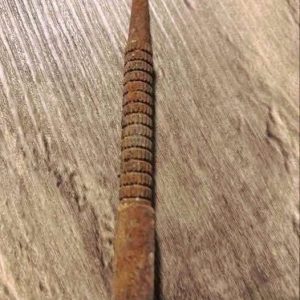
When I first uncovered a rusty chain buried beside an old mailbox post, I had absolutely no idea what I was looking at. My first reaction was, “What the heck is this thing attached to?” Curious, I followed the chain toward the remains of the mailbox support, and the mystery began to unravel. It wasn’t buried treasure or some forgotten piece of machinery. Instead, it appeared to be an old rural mailbox anchor—a simple homemade system designed to keep a mailbox post firmly in place. A metal anchor had been secured deep in concrete, with the chain connecting it to the post above ground. It was a surprisingly clever example of the practical problem-solving once common around rural properties.
Rural mailboxes have always had to endure more abuse than they might seem to face. Sitting close to the road leaves them exposed to passing vehicles, snowplows, strong storms, and even deliberate vandalism. Over the years, homeowners have tried everything from heavy wooden posts and metal brackets to concrete reinforcement and homemade anchoring systems. The buried chain seemed to work on a basic but effective principle: the underground concrete anchor resisted movement while the chain transferred pulling forces from the mailbox post into the buried support. There was no complicated technology involved—just steel, concrete, a shovel, and some determination.
I pulled on the rusty chain several times, but it barely moved. Whatever was underneath was firmly cemented into the ground, so I decided it was better to leave it undisturbed. That made me wonder how many decades it had been there and how many times it might have helped keep the mailbox standing. Discoveries like this can make exploring older rural properties surprisingly fascinating. An ordinary piece of forgotten hardware can tell a story about how someone once dealt with an everyday problem using whatever materials were available. Still, a buried chain shouldn’t automatically be assumed to be a mailbox anchor. It is important to determine what it connects to and consider the possibility of underground utilities before doing any digging.
Today, anyone dealing with a repeatedly damaged rural mailbox is better off choosing a sturdy, properly installed solution rather than attempting to create an overly reinforced roadside structure. A strong support, secure mailbox attachment, clear visibility, reflective markings, and properly maintained vegetation can all improve durability and safety while helping meet local postal and roadway requirements. Motion-activated lighting or cameras may also help discourage vandalism. That old chain may no longer have a mailbox to protect, but it remains a fascinating reminder of rural ingenuity. Sometimes the most interesting traces of history aren’t valuable antiques—they’re the simple remnants of someone finding a smart way to solve an ordinary problem.